How to Choose an Aviation Software Development Company for Safety-Critical Systems
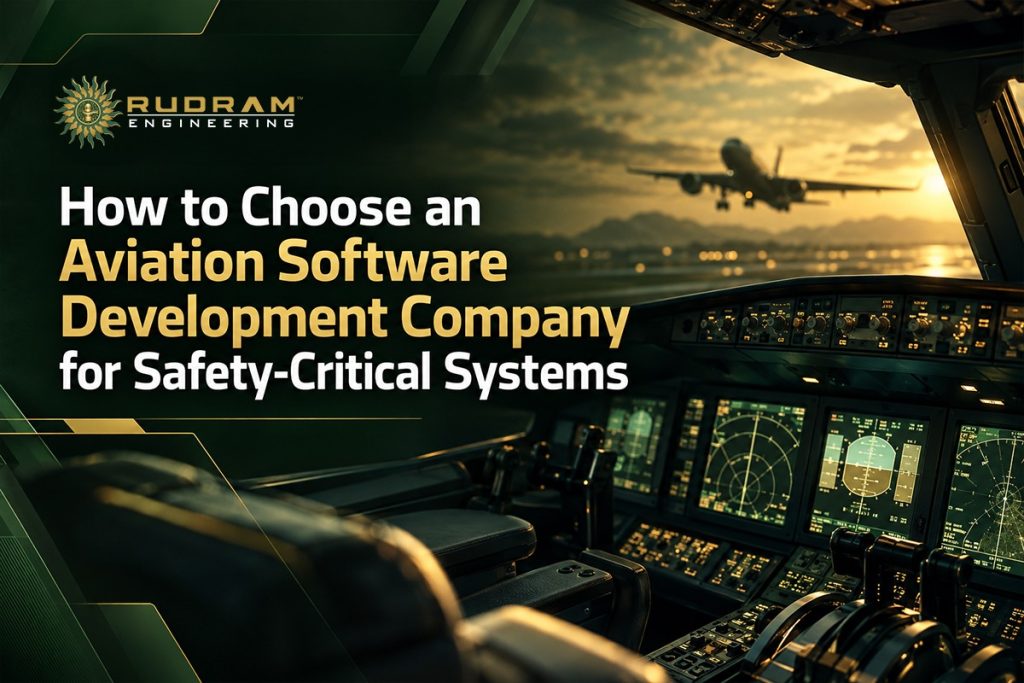
How to Choose an Aviation Software Development Company for Safety-Critical Systems Selecting an aviation software development company for safety-critical flight systems requires verifying regulatory compliance, architectural rigor, and deterministic performance. Aviation software governs flight control loops, engine management units, and cockpit telemetry, where system failures carry catastrophic risks. Partnering with an experienced engineering team ensures that every line of airborne code complies with strict airworthiness mandates like DO-178C. At Rudram Group, we deliver end-to-end engineering solutions that streamline airborne software verification and secure regulatory approval. Evaluation Domain Core Requirements Regulatory Benchmark Compliance & Verification Bidirectional traceability, MC/DC code coverage, tool qualification DO-178C / DO-330 System Architecture Deterministic timing, time/space memory partitioning ARINC 653 / IMA Hardware Integration Real-time fault injection, automated regression, sensor simulation HIL Simulation Testbeds Long-Term Scalability Decoupled board support packages, open architecture standards MOSA Compliance Selecting an unqualified vendor often leads to missed certification milestones, unverified execution loops, and costly software redesigns. Safety-critical systems require bidirectional requirements traceability, formal verification processes, and strict time-and-space isolation. Evaluating technical teams on their direct domain experience helps aerospace manufacturers mitigate long-term development risks. Below is an inspection of key criteria aerospace leaders must evaluate when choosing a development partner. How Do You Verify DO-178C Compliance Capabilities? A qualified aviation software development company must demonstrate proven mastery of RTCA DO-178C standards across all Design Assurance Levels. Software Level A represents catastrophic failure conditions, requiring exhaustive verification, testing, and structural coverage analysis like MC/DC. Lifecycle Planning: Your partner must provide structured Software Development Plans (SDP) and Software Verification Plans (SVP). Bidirectional Traceability: Complete mapping must connect system requirements down to low-level assembly code and test cases. Tool Qualification: Development and verification tools should comply with DO-330 guidelines to ensure operational validity. Relying on specialized Software Systems Engineering guarantees that safety requirements govern every phase of the software lifecycle. Engineers establish formal quality assurance reviews and configuration baselines before submitting certification artifacts to airworthiness authorities. This level of structural rigor prevents costly audit findings during Stage of Involvement (SOI) reviews. What Role Does Deterministic Software Architecture Play? Safety-critical avionics depend on deterministic execution where software timing is completely predictable under extreme operational loads. Modern airborne platforms utilize Integrated Modular Avionics (IMA) governed by ARINC 653 time and space partitioning standards. Time Partitioning: Fixed execution windows guarantee that flight control tasks receive dedicated processing cycles. Space Partitioning: Isolated memory buffers prevent lower-criticality applications from corrupting flight-critical memory pools. Deterministic Bus Routing: Communication data buses like ARINC 664 (AFDX) isolate high-priority telemetry traffic. By leveraging expert Software Engineering Services, developers implement robust real-time operating system (RTOS) kernels to enforce strict partitioning. This architectural isolation ensures that adding secondary cockpit features never compromises primary flight stabilization loops. Proper partition design drastically reduces re-certification costs whenever application modules are updated. How Important Is Hardware-in-the-Loop Verification? Validating safety-critical software requires testing real-time execution against physical avionics hardware and sensor inputs. Leading engineering teams utilize Hardware-in-the-Loop (HIL) simulation testbeds to inject abnormal flight conditions and hardware failures safely. Fault Injection Testing: Validates automatic recovery when unexpected bus corruption or power loss occurs. Boundary Analysis: Tests system responses to out-of-range sensor telemetry and abnormal flight inputs. Automated Regression Runs: Executes continuous integration tests across physical hardware baselines. Integrating tailored DevSecOps Solutions into HIL test beds automates static analysis, coding standard checks, and execution logging. Automated testing catches timing anomalies and race conditions early, saving thousands of engineering hours prior to ground trials. Comprehensive validation records provide definitive evidence of airworthiness for regulatory audits. Can the Team Design a Scalable Software Architecture? Aerospace platforms operate for decades, requiring digital architectures that can absorb upgrades without complete system re-engineering. A forward-thinking development partner builds modular systems that separate core flight logic from evolving hardware components. Hardware Abstraction Layers: Decouples application code from underlying board support packages to simplify processor upgrades. Modular Open Systems Approach: Aligns software architectures with MOSA standards to support third-party feature integration. Reusable Artifacts: Structures software requirements and test vectors to simplify future aircraft variant certification. Developing a Scalable Software Architecture protects long-term R&D investments while accelerating time-to-market for future capabilities. Modular designs allow operators to integrate new navigation protocols or ground-link communications gracefully. This structural flexibility extends aircraft operational lifespans and reduces total cost of ownership. Why Choose End-to-End System and Software Development Partners? Developing airborne systems requires tight alignment between systems engineering, software design, and physical electronics. Working with an end-to-end partner eliminates integration gaps that frequently occur when handoffs happen between isolated vendors. Cross-Discipline Alignment: Unifies systems engineers, embedded developers, and certification specialists under one framework. Unified Requirements Management: Maintains single-source-of-truth requirements management across hardware and software teams. Streamlined Authority Liaison: Direct experience handling certification documentation accelerates formal compliance reviews. Comprehensive system and software development capability guarantees that safety considerations guide every engineering decision from initial concept to final deployment. Experienced engineering firms act as trusted technical partners, managing project complexity and maintaining schedule predictability. Partnering with proven aerospace specialists gives manufacturers complete confidence in their platform’s airworthiness. Build Airworthy Aviation Systems with Rudram Engineering Engineering safety-critical aviation software requires proven regulatory experience, architectural rigor, and disciplined systems engineering. At Rudram Engineering, our registered practitioners offer specialized Software Engineering Services to help aerospace manufacturers design, verify, and certify flight-critical software. We implement DO-178C-compliant life cycles, build ARINC 653 partitioned architectures, and execute rigorous HIL testing pipelines. Contact us today to discover how our engineering firm can accelerate your safety-critical aviation projects. Rudram Engineering, Inc. | Rockledge, FL | Serving the Defense Industrial Base for 18+ years | Trusted by NASA, the U.S. Air Force Academy, and Raytheon { “@context”: “https://schema.org”, “@type”: “BlogPosting”, “headline”: “Software Engineering Services for Aviation Safety”, “description”: “Specialized software engineering services for aviation systems, including DO-178C life cycles, ARINC 653 architectures, verification, and HIL testing.”, “mainEntityOfPage”: { “@type”: “WebPage”, “@id”: “https://rudramengineering.com/software-engineering-services-aviation/” }, “publisher”: { “@type”: “Organization”, “name”: “Rudram Engineering”, “url”: “https://rudramengineering.com/” }, “keywords”: [ “Software Engineering Services”, “Safety-critical aviation software”, “Aerospace software engineering”, “DO-178C software compliance”, “ARINC 653 architecture”, “Hardware-in-the-loop testing” ],
The Strategic Role of DevOps Practices in SaaS Deployment for Enterprise Applications
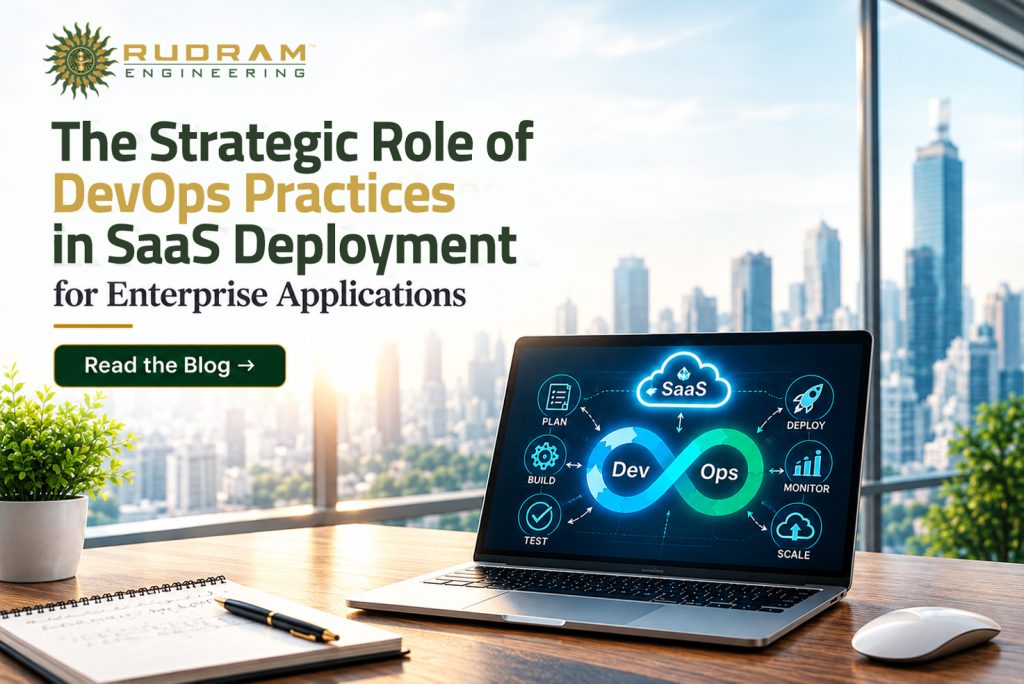
The Strategic Role of DevOps Practices in SaaS Deployment for Enterprise Applications Enterprise application delivery requires speed, security, and absolute operational reliability. As organizations shift toward cloud-native platforms, the Role of DevOps Practices in SaaS Deployment becomes the key driver of long-term business success. Modern enterprises can no longer rely on slow, manual release cycles that introduce risk and prolong time-to-market. At Rudram Group, we help enterprise clients build automated deployment pipelines that accelerate feature delivery while preserving total system stability. By embedding automation into every phase of software engineering, organizations eliminate operational bottlenecks and maintain regulatory compliance. Modern enterprise applications require high availability and robust data protection across complex cloud environments. Strategic DevOps practices align development teams directly with operational goals, ensuring that software updates flow continuously. Our team designs robust deployment frameworks that allow enterprise platforms to scale effortlessly without interrupting active business workflows. Accelerating Time to Market with Automated CI CD Pipelines Automated integration pipelines form the technical foundation of high-velocity software delivery in modern enterprise organizations. By automating code verification and testing, engineering teams reduce release friction and deploy updates in short, predictable cycles. Continuous integration validates code daily, catching defects early in development before they reach staging environments. Automated staging environments mirror live production systems to eliminate unexpected release failures. Zero-downtime deployment strategies ensure uninterrupted business operations during major application updates. Implementing a disciplined Risk Management Framework ensures that automated pipelines enforce continuous security and validation checks. This automated structure reduces human error, shortens release schedules from months to hours, and stabilizes the core environment. By eliminating manual handover steps between developers and operations teams, companies achieve a faster and more predictable release cadence. Building Scalable Environments Using Infrastructure as Code Enterprise software requires flexible cloud infrastructure that scales dynamically with changing user workloads. Manual server provisioning introduces configuration drift, security vulnerabilities, and deployment delays that hurt growth. Declarative configurations allow infrastructure to be version-controlled, audited, and tested alongside application source code. Automated environment provisioning eliminates manual setup tasks and guarantees absolute environment parity. Rapid cloud scaling empowers enterprise teams to deploy identical operational environments across global regions in minutes. Utilizing expert Software Engineering Services enables organizations to treat infrastructure definition as core code rather than manual hardware setup. Our engineers implement clear infrastructure automation that provisions compute, network, and storage resources on demand. This programmatic approach ensures your cloud architecture scales seamlessly while maintaining a tight, audit-ready security baseline. Strengthening SaaS Architecture with Integrated DevSecOps Security cannot be treated as an afterthought or a final manual check in high-velocity enterprise software development. Evolving threat vectors require continuous security verification directly embedded within the deployment pipeline. Automated static code analysis identifies security flaws and vulnerabilities early in the coding cycle. Container image scanning guarantees that only verified and signed software dependencies run in production environments. Continuous compliance tools verify adherence to stringent regulatory frameworks like SOC 2, HIPAA, and ISO standards. Deploying comprehensive DevSecOps Solutions ensures that every build artifact is inspected and verified automatically before deployment. By shifting security checks to the early stages of development, organizations prevent costly late-stage remediations. This proactive defensive posture safeguards tenant data while preserving rapid deployment momentum across all enterprise environments. Optimizing Multi-Tenant SaaS Environments for Enterprise Growth Managing large-scale software platforms requires strict multi-tenant isolation alongside efficient shared resource utilization. Multi-tenant architectures must scale dynamically to handle traffic spikes without compromising tenant privacy or system performance. Dynamic resource allocation balances compute workloads automatically based on real-time traffic demands. Isolated database architectures prevent data cross-contamination and satisfy strict enterprise compliance mandates. Automated tenant provisioning streamlines customer onboarding without requiring dedicated infrastructure overhead. Relying on a robust Scalable Software Architecture ensures that user growth does not degrade system performance for existing clients. We assist software providers in designing resilient multi-tenant environments that manage load distribution efficiently. When technical architecture and deployment automation work in harmony, expanding your enterprise customer base becomes a seamless operational process. Maximizing System Uptime Through Continuous Observability Maintaining application health requires deeper operational visibility than simple uptime monitoring or pass-or-fail alerts. Complex microservice environments demand real-time insights into system metrics, application logs, and distributed execution traces. Centralized log management aggregates operational telemetry from every microservice into a single management pane. Real-time metrics monitoring detects performance anomalies before they impact the end-user experience. Distributed tracing tracks transaction pathways across complex cloud networks to isolate latency bottlenecks rapidly. Applying disciplined Software Systems Engineering principles ensures your operational teams can diagnose and resolve issues instantly. Continuous observability provides the actionable data needed to maintain high system availability and honor strict customer SLAs. At REI, we help organizations turn complex operational data into actionable engineering insights that safeguard business continuity. Elevate Your Enterprise Platform with Rudram Engineering Building resilient cloud platforms requires deep technical mastery, disciplined engineering, and proven security frameworks. At Rudram Engineering, our team delivers specialized Software Engineering Services and DevSecOps implementations that help enterprise organizations scale securely. We design automated deployment pipelines, implement Infrastructure as Code, and optimize multi-tenant architectures for maximum velocity. Visit Rudram Engineering to explore our engineering services and learn how we can accelerate your cloud software deployments. Rudram Engineering, Inc. | Rockledge, FL | Serving the Defense Industrial Base for 18+ years | Trusted by NASA, the U.S. Air Force Academy, and Raytheon Download Brochure
How Systems Engineering Firms Streamline Real-Time Avionics Integration
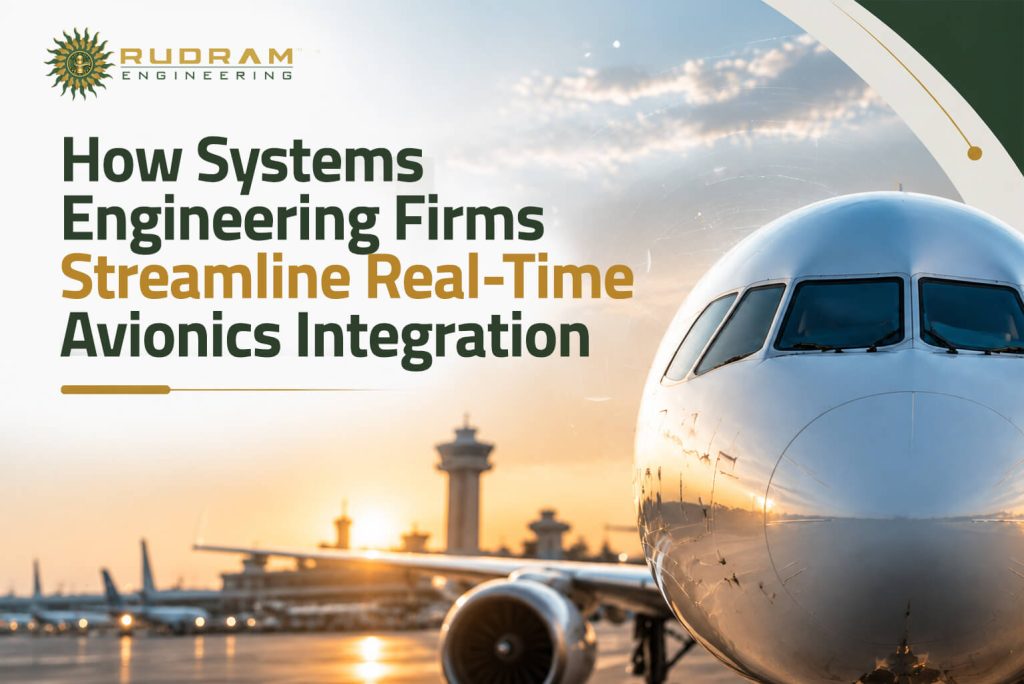
How Systems Engineering Firms Streamline Real-Time Avionics Integration Modern aerospace design relies heavily on complex digital architectures that execute mission-critical tasks within microsecond tolerances. Integrating flight controls, radar feeds, cockpit displays, and communication links into a unified flight deck is a formidable technical challenge. A specialized Systems Engineering Firm plays a crucial role in preventing integration bottlenecks, reducing hardware redundancy, and eliminating latency. At Rudram Group, we help defense and commercial aerospace partners harmonize complex hardware and software into deterministic, airworthy avionics suites. Uncoordinated software integration across multiple equipment vendors often results in budget overruns, interface conflicts, and unpredictable system behavior. Flight-critical applications require strict time and space partitioning to ensure that minor software subroutines never interfere with primary flight controls. Partnering with an experienced technical team provides the cross-disciplinary oversight necessary to establish structural, functional, and electrical system harmony. Below is an inspection of how disciplined engineering methodologies streamline real-time avionics integration for next-generation aircraft. Harmonizing Integrated Modular Avionics Architectures Legacy aircraft relied on federated architectures where every individual avionics function required its own dedicated black box hardware. Modern aerospace platforms utilize Integrated Modular Avionics (IMA), sharing powerful processing nodes across multiple onboard software applications. Resource Optimization: Consolidating computing hardware significantly reduces total aircraft weight, power consumption, and thermal output. ARINC 653 Partitioning: Time and space partitioning prevents low-criticality software from hogging processor cycles meant for flight-critical tasks. Hardware-Software Decoupling: Standardized application interfaces allow software teams to upgrade individual functions without redesigning underlying processors. Implementing a disciplined Risk Management Framework ensures that system-level dependencies are systematically identified before physical integration begins. Engineers define clear logical boundaries and communication channels across all flight control units and sensor networks. This structural rigor eliminates unexpected system lockups and ensures predictable execution during high-stress flight maneuvers. Our team works closely with aerospace manufacturers to construct robust processing environments that simplify subsequent certification audits. Master Plan Execution with Software Systems Engineering Building deterministic avionics requires treating software development, bus communications, and physical electronics as a single unified discipline. Relying on specialized Software Systems Engineering methodologies ensures that every line of embedded code aligns with overall airframe safety requirements. High-speed data buses like ARINC 664 (AFDX) and MIL-STD-1553 are configured to guarantee zero packet loss for critical telemetry. Deterministic scheduling algorithms enforce rigid execution windows for flight stabilization and navigation loops. Fault-tolerant fallback routines automatically isolate failing sub-processors without impacting active cockpit displays. By utilizing expert Software Engineering Services, developers establish comprehensive requirements traceability from high-level flight goals down to low-level assembly instructions. This systematic organization ensures that every hardware interrupt and memory buffer behaves deterministically under all thermal and flight conditions. Catching execution anomalies during initial simulation phases saves thousands of engineering hours during physical ground testing. The result is a resilient digital core that maintains complete stability across every operational phase. Accelerating Hardware-in-the-Loop Simulation and Validation Validating real-time performance on physical aircraft is both dangerous and extraordinarily expensive. Leading engineering practices rely on advanced Hardware-in-the-Loop (HIL) testbeds to simulate real-world flight dynamics safely on the ground. Real-time flight simulators inject synthetic sensor data directly into flight control computers to test extreme edge cases. Automated fault injection rigs verify how the avionics suite responds to sudden power loss, bus corruption, or sensor failures. High-speed log analyzers capture sub-millisecond execution timing to detect subtle software race conditions early. Integrating modern DevSecOps Solutions into the avionics testing pipeline automates code analysis and regression runs every time a baseline is updated. Automated testing verifies that bug fixes applied to navigation tools do not inadvertently alter the timing of engine monitoring channels. This continuous validation loop provides objective proof of system stability long before first-flight clearances are requested. Contractors gain complete visibility into system performance metrics through real-time dashboards and automated verification logs. Building Future-Proof Avionics via Scalable Software Architecture Aircraft platforms remain in operational service for decades, requiring technical architectures that can adapt as technology evolves. Integrating new radar capabilities, autonomous flight algorithms, or satellite communication links should not require completely tearing out existing flight decks. Designing a modern Scalable Software Architecture ensures that your avionics suite accommodates future capability growth gracefully. Open system standards allow operators to integrate third-party software components without invalidating existing safety certifications. Relying on proven system and software development guidelines creates a modular ecosystem where new features drop into pre-configured processing partitions. This structural flexibility drastically reduces the lifetime maintenance costs associated with avionics refreshes and fleet modernization programs. As defense and commercial requirements shift toward greater autonomy, scalable architectures provide a smooth upgrade path. At REI, we help aerospace leaders build future-ready avionics platforms designed for long-term operational dominance. Streamline Your Flight Deck Integration with Rudram Engineering Achieving seamless, real-time integration across complex avionics architectures requires deep domain expertise and disciplined system engineering. At Rudram Engineering, our registered practitioners and senior aerospace engineers provide elite Software Engineering Services to help manufacturers design, validate, and certify mission-critical flight platforms. We build deterministic software environments, implement robust ARINC 653 partitioning, and establish automated HIL testing pipelines that reduce certification risks. Visit Rudram Engineering to discover how our engineering firm can accelerate your real-time avionics integration programs. Rudram Engineering, Inc. | Rockledge, FL | Serving the Defense Industrial Base for 18+ years | Trusted by NASA, the U.S. Air Force Academy, and Raytheon { “@context”: “https://schema.org”, “@graph”: [ { “@type”: “BlogPosting”, “@id”: “https://rudramengineering.com/cmmc-compliance-cost-small-businesses”, “mainEntityOfPage”: { “@type”: “WebPage”, “@id”: “https://rudramengineering.com/” }, “headline”: “How Much Does CMMC Compliance Cost? A Realistic Breakdown for Small Businesses”, “description”: “Explore the expected costs of CMMC Level 2 compliance for small businesses, including gap analysis, technical remediation, documentation, C3PAO assessment, and ongoing maintenance.”, “author”: { “@type”: “Organization”, “name”: “Rudram Engineering”, “url”: “https://rudramengineering.com/” }, “publisher”: { “@type”: “Organization”, “name”: “Rudram Engineering”, “url”: “https://rudramengineering.com/” }, “datePublished”: “2026-08-25”, “dateModified”: “2026-08-25”, “articleSection”: “CMMC Compliance”, “keywords”: [ “CMMC compliance cost”, “CMMC Level 2 certification cost”, “CMMC cost for small businesses”, “CMMC compliance”, “CMMC Level 2”, “C3PAO assessment”, “CMMC readiness”, “CMMC gap analysis”, “CMMC technical remediation”, “CMMC compliance consulting”, “Software Engineering Services”, “Systems Engineering Firm”,
How to Choose an Aviation Software Development Company: 9 Critical Criteria for Aerospace Leaders
How to Choose an Aviation Software Development Company: 9 Critical Criteria for Aerospace Leaders Modern aerospace operations depend heavily on custom software to drive airborne hardware, ground control systems, and complex fleet management logistics. Selecting the right aviation software development company is a strategic decision that determines whether your flight systems achieve regulatory certification or face grounded delays. With strict standards governing airborne safety, cyber resilience, and real-time processing, evaluating prospective engineering partners requires a disciplined framework. At Rudram Engineering, we help aerospace organizations navigate these complex choices by aligning high-reliability software architecture with mandatory federal compliance standards. Outsourcing safety-critical or operational systems to an inexperienced vendor introduces immense financial, legal, and operational risks. Aerospace leaders must evaluate external engineering teams across specific domain capabilities rather than accepting generic software promises. From airborne firmware to cloud-native maintenance platforms, your technology partner must demonstrate proven mastery over industry-specific regulatory constraints. This guide outlines the nine mandatory criteria aerospace executives must inspect before selecting an external software vendor. 1. Proven Mastery of DO-178C and Safety Critical Compliance Airborne software requires absolute safety verification because coding flaws in flight systems can lead to catastrophic hardware failure. Your prospective vendor must demonstrate practical experience building systems according to DO-178C software life cycle guidelines. Design Assurance Levels (DAL A-E): Ensure the vendor understands the rigorous verification required for DAL A and B flight-critical software. Bidirectional Traceability: Verify that every line of executable code traces directly back to high-level system requirements and test cases. Independent Verification: Confirm the company maintains separate verification teams to conduct objective code reviews and structural coverage analysis. Implementing a disciplined Risk Management Framework allows engineering leaders to systematically evaluate vendor processes long before deployment. A compliant partner will readily present audit-ready artifacts, baseline configuration logs, and formal verification plans. Selecting a vendor with deep compliance expertise ensures your software passes FAA or EASA audits without unexpected redesigns. 2. Deep Hardware Integration and DO-254 Expertise Aviation systems rarely exist as standalone software; they interact continuously with microcontrollers, sensors, and avionics buses.An ideal vendor must understand how software interfaces with hardware designed under DO-254 standards. The team must possess hands-on experience with standard avionics protocols including ARINC 429, MIL-STD-1553, and CAN bus architectures. Engineers must understand real-time operating systems (RTOS) and deterministic timing constraints required for embedded controls. The vendor should have hardware-in-the-loop (HIL) testing capabilities to simulate real-world flight dynamics safely. Engaging a specialized Systems Engineering Firm ensures that software development and hardware integration occur in total alignment. This cross-disciplinary approach prevents communication gaps between embedded hardware teams and software developers. Coordinated hardware-software development accelerates initial prototyping and simplifies final system integration. 3. Comprehensive Cybersecurity and Secure Supply Chain Controls Aviation software connects to connected cockpits, ground stations, and maintenance networks, expanding the digital attack surface. Your development vendor must enforce rigorous supply chain security to prevent malicious code injection or unauthorized system tampering. Demand proof of secure coding practices compliant with ISO 27001, SOC 2 Type II, or NIST standards. Ensure the development environment uses role-based access control, multi-factor authentication, and continuous vulnerability scanning. Require absolute transparency regarding third-party open-source libraries incorporated into your software stack. Partnering with an experienced vendor guarantees that software architectures remain resilient against evolving cyber threats. Securing data pipelines and communication links protects proprietary flight data and safeguards passenger safety. A security-first partner ensures your digital infrastructure withstands aggressive penetration testing and regulatory scrutiny. 4. Experience in Legacy System Modernization and Integration Many aerospace operators rely on legacy software frameworks that are difficult to scale, update, or maintain. Your software vendor must excel at modernizing legacy codebases into modern microservices without disrupting ongoing flight operations. Look for expertise in containerization and modular software design that allows incremental system upgrades. Ensure the team can build robust API layers to bridge legacy mainframes with modern analytics platforms. Verify that data migration processes maintain historical flight records and operational telemetry without corruption. Deploying a modern Scalable Software Architecture transforms legacy operational tools into flexible, cloud-ready assets. Decoupling monolithic software components allows teams to update individual features quickly without re-certifying the entire system. This modularity lowers long-term maintenance costs while improving overall system stability and performance. 5. Agile Development Tailored for Regulated Environments Traditional software development methods often clash with the rigid documentation required by aerospace authorities. A top-tier vendor balances modern agile development speed with the strict change control required by regulatory frameworks. The team should use hybrid agile frameworks that incorporate formal baseline reviews and change control boards. Continuous integration pipelines must automatically run static code analysis and requirement mapping tools. Sprint deliverables must include verified documentation artifacts, not just working code modules. Integrating tailored DevSecOps Solutions into the development workflow automates compliance tracking during every coding sprint. Automated testing catches bugs and compliance deviations early in development when they are inexpensive to fix. This hybrid approach yields fast development cycles while maintaining the complete audit trails needed for certification. 6. Domain-Specific Expertise in Flight Operations and MRO Building software for aviation requires deep domain knowledge about fleet scheduling, maintenance workflows, and flight physics. Engineers who understand pilot workflows and technician needs build intuitive software that reduces operational errors. Confirm past project experience in developing Maintenance, Repair, and Overhaul (MRO) management software. Look for expertise in predictive maintenance algorithms that analyze sensor data to forecast component wear. Evaluate their experience with flight planning tools, weight and balance calculators, and crew management systems. Utilizing expert Software Engineering Services guarantees that complex operational logic is translated into reliable application features. Domain-aware developers anticipate edge cases specific to aviation operations, such as low-connectivity flight environments. Their industry knowledge eliminates long onboarding phases and leads to superior user interface design. 7. Clear Intellectual Property Protection and Data Governance Your custom aviation software contains valuable intellectual property, algorithms, and business logic that must be safeguarded. Contractual agreements must explicitly state that your organization retains full ownership of all source code and documentation. Enforce strict non-disclosure agreements and clear work-for-hire contractual terms across
How Much Does CMMC Compliance Cost? A Realistic Breakdown for Small Businesses
How Much Does CMMC Compliance Cost? A Realistic Breakdown for Small Businesses The financial reality of defense contracting has fundamentally changed as we move toward the final quarters of 2026. For small businesses, the primary question is no longer whether they can afford to implement new security standards, but whether they can afford the cost of being disqualified from the market. Achieving CMMC Level 2 certification is a significant capital investment that requires careful planning and a disciplined approach to budgeting. At Rudram Engineering, we focus on helping small defense contractors find the most cost-efficient path to compliance without sacrificing the technical integrity required for a successful audit. The total cost of CMMC readiness is often misunderstood because many firms only focus on the final invoice from the third-party assessor. In reality, the C3PAO fee is just one component of a much larger investment that includes gap analysis, technical remediation, and ongoing maintenance. Small businesses should expect the initial transition to Level 2 to range between $75,000 and $150,000 depending on their existing security maturity. Our registered practitioner on staff works to identify exactly where your budget should be allocated to provide the highest return on security investment. A Detailed Breakdown of Initial Investment Costs Understanding where your capital is being deployed allows for better strategic decision-making during the readiness phase. For most small firms, the initial investment is split across four primary categories that each play a vital role in the certification process. Gap Analysis and Scoping: Budget $5,000 to $15,000 for a professional evaluation of your current posture and a clear definition of your CUI enclave. Technical Remediation: Expect to spend $20,000 to $60,000 on software upgrades, hardware replacements, and the implementation of required security tools like EDR and SIEM. Documentation Development: Drafting the System Security Plan and accompanying policies typically costs between $10,000 and $25,000 when using specialized consultants. Documentation Development: Drafting the System Security Plan and accompanying policies typically costs between $10,000 and $25,000 when using specialized consultants. The most effective way to control these costs is through an aggressive scoping strategy that “shrinks the box” around your sensitive data. By isolating Controlled Unclassified Information to a specific set of systems, you reduce the number of endpoints that require expensive Software Engineering Services for hardening. A professional Systems Engineering Firm can help you design this architecture, ensuring that you only pay to secure the systems that truly need it. This disciplined approach prevents the “scope creep” that often drives small business compliance costs well beyond their initial projections. Ongoing Annual Maintenance and Recertification CMMC is not a one-time expense; it is a permanent operational cost that must be factored into your long-term business model. Maintaining your certification requires continuous monitoring, annual affirmations, and a full reassessment every three years. Managed Security Services: Small businesses should budget $3,000 to $7,000 monthly for a provider to handle 24/7 monitoring, incident response, and log management. Software Renewals and Licensing: Annual costs for compliant email, cloud storage, and security tools typically range from $5,000 to $15,000. Annual Internal Assessments: Budget $2,000 to $5,000 for the labor and documentation required to affirm your continuous compliance with the 110 controls. Utilizing DevSecOps Solutions can significantly lower these ongoing costs by automating the evidence collection and reporting process. When your systems are designed with Scalable Software Architecture, adding new security layers or expanding your team does not require a complete redesign of your compliance framework. Automation reduces the human labor involved in audit preparation, which is consistently the most expensive part of maintaining a high security posture. By investing in quality engineering today, you are lowering the long-term financial burden of staying in the defense industrial base. The Hidden Cost of Remediation Failures One of the most expensive mistakes a small business can make is attempting to undergo a C3PAO assessment before they are truly ready. Failing an audit not only results in the loss of your assessment fee but also requires a second round of remediation and a re-assessment fee. Re-assessment Costs: A follow-up audit can cost an additional $10,000 to $30,000 depending on the severity of the identified gaps. Contractual Risk: Project delays caused by audit failures can lead to liquidated damages or the complete loss of a contract to a more prepared competitor. Opportunity Cost: The time your senior leadership spends managing a failed audit is time taken away from growing your core business and delivering for your customers. Our approach to Software Systems Engineering is built on the principle of “getting it right the first time.” By working with our registered practitioner, you receive a clear, prioritized roadmap that ensures every dollar you spend moves you closer to a successful certification. We treat compliance as a mission-critical engineering task, applying the same discipline and precision that you apply to your own products. This focus on accuracy and relevance is what allows our partners to navigate the CMMC process with total financial and operational confidence. Strategic Budgeting for the 2026 Deadline As we approach the November 10, 2026 transition, the demand for qualified assessors and consultants is driving market prices higher. Small businesses that wait until the final months of the year will likely face “rush fees” and limited availability for both tools and talent. By starting your journey now, you can lock in current rates and avoid the premium pricing that will inevitably accompany the final surge for certification. A well-timed investment in your cybersecurity infrastructure is the best way to protect your revenue and your reputation in the federal market. The compliance revolution is a fundamental shift that rewards the prepared and penalizes the reactive. While the price tag for CMMC can be daunting, it is a necessary investment for any firm that wants to participate in the future of national defense. By partnering with an engineering firm that understands the technical and financial realities of small business, you can turn compliance into a competitive advantage. At REI, we are dedicated to providing the elite engineering support
CMMC System Security Plan (SSP): What Assessors Check
CMMC System Security Plan (SSP): What Assessors Check Your System Security Plan (SSP) is the first thing a CMMC assessor reads. It describes your environment and lays out how you meet each of the 110 NIST SP 800-171 controls. When it’s solid, the assessment goes smoothly. When it’s not, you’ve basically handed the assessor a checklist of gaps to go dig into. Here’s what your SSP has to cover and why it’s the one part of CMMC you can’t push down the road. What the SSP Really Is The SSP isn’t paperwork for the auditor’s benefit. It’s the document they grade you against. A C3PAO won’t inspect your network cold; they read your plan first, then check whether your systems actually match what it claims. If a control isn’t written down, they treat it as not done. And it covers a lot of ground: your system boundary, every system that touches CUI, your network architecture, how each control is met, and who owns what. NIST 800-171 breaks the 110 controls into 320 assessment objectives, and the SSP is where you show you meet them. You Can’t Defer the SSP Plenty of contractors plan to fix gaps later with a POA&M. That doesn’t work for the SSP. Under the CMMC rule (32 CFR 170.21), the SSP requirement CA.L2-3.12.4 is one of a small set of controls that can never go on a POA&M. A few others are off-limits too, along with any control worth 3 or 5 points, such as multi-factor authentication. And to reach Conditional Level 2 at all, you need a score of at least 88 out of 110, with the SSP fully done and matching your real environment before the assessor shows up. A Downloaded Template Won’t Save You You can find an SSP template online. It won’t pass on its own. Assessors have read hundreds of them, and placeholder language gives it away. “Access control is enforced through role-based policies” tells them nothing they can verify. A template with half the blanks filled is a red flag. Your SSP has to name the actual systems, configurations, tools, and people. Generic plans get flagged because they describe a generic company instead of yours. Keep It Current The SSP isn’t one-and-done. Your certification runs three years, with an annual affirmation that you’re still compliant and that affirmation is a formal statement to the government, backed by your SSP. So when something changes and the plan doesn’t keep up with a new system, a reconfiguration, someone leaving you ends up with a gap between what you claimed and what’s actually true. That’s where False Claims Act exposure starts. Build SSP updates into your normal change process instead of scrambling before each review. Where Most People Get Stuck The hard part is that an SSP is only as accurate as the environment behind it. Somebody has to scope your CUI boundary, understand your architecture, and know how each control is really implemented. And when a control your plan needs to claim isn’t in place yet, somebody has to build it before you can honestly write it down. That’s engineering, not writing. That’s how we work at Rudram. Our Registered Practitioner scopes your boundary and writes an SSP mapped to your real systems. And because we’re a systems engineering firm with 18+ years in the Defense Industrial Base with NASA, Raytheon, and the U.S. Air Force Academy among our clients when a control needs to be built before your plan can claim it, our engineers handle that too. One team writes the plan and stands up the environment it describes. Frequently Asked Questions Q. Can the SSP be on a POA&M? No. Under 32 CFR 170.21, the SSP control (CA.L2-3.12.4) can’t be deferred. It has to be complete and accurate at the time of your assessment. Q. Can I use an SSP template for CMMC? A template can help with structure, but it won’t pass on its own. Assessors read the SSP against your actual environment, and placeholder text is a red flag. Q. What score do I need? At least 88 out of 110 (80%) for Conditional Level 2, with all required controls including the SSP met. POA&Ms only cover certain 1-point gaps, and you have 180 days to close them. Schedule Your Free CMMC Readiness Assessment with Rudram’s Registered Practitioner Rudram Engineering, Inc. | Rockledge, FL | Serving the Defense Industrial Base for 18+ years | Trusted by NASA, the U.S. Air Force Academy, and Raytheon Download Brochure
Cloud Modernization Strategies That Transform Legacy Systems Into Agile, Scalable, and Future‑Ready Solutions
Cloud Modernization Strategies That Transform Legacy Systems Into Agile, Scalable, and Future‑Ready Solutions The digital landscape in 2026 demands a radical shift in how we approach software delivery within highly monitored sectors. For organizations in aerospace, defense, and healthcare, the traditional friction between rapid innovation and rigid regulatory requirements has finally reached a breaking point. Success now depends on a unified strategy that treats security not as a final gatekeeper, but as a continuous thread in the fabric of development. At Rudram Engineering, we specialize in bridging this gap by providing high performance engineering that meets the strictest federal and industrial standards. Modern SaaS Application Development Services must now account for a “Compliance as Code” reality where every update is pre-validated for safety. Rudram Engineering integrates these complex engineering requirements into seamless, user-centric platforms for our global partners. By moving away from siloed operations, firms can finally achieve the “Velocity of DevOps” without sacrificing the “Integrity of the Mission.” This balance is particularly critical when dealing with the Risk Management Framework (RMF) or aviation safety protocols that leave zero room for error. Strategic Framework for Modern Software Delivery The evolution of DevOps Practices in SaaS Deployment has transformed the CI/CD pipeline from a mere delivery mechanism into a robust governance engine. To achieve true optimization in a regulated environment, technical leaders are now adopting a “Paved Road” approach to infrastructure. Integrating automated policy scanning directly into the developer workflow to catch misconfigurations before they reach the staging environment. Utilizing immutable infrastructure patterns to ensure that the production environment remains consistent and audit ready at all times. Implementing real-time observability 2.0 tools that use AI to predict potential compliance drifts before they manifest as actual violations. Choosing a specialized SaaS development company is no longer just about hiring programmers; it is about finding a partner that understands the nuances of multi-tenancy. In regulated sectors, a data breach in one tenant’s environment can jeopardize the entire platform’s certification, leading to catastrophic legal and financial fallout. We address this by employing high-fidelity isolation architectures and hardware rooted security modules that exceed the baseline requirements for modern enterprise applications. This level of precision ensures that your intellectual property and sensitive data remain encapsulated within a hardened, high-performance cloud ecosystem. Security as the Catalyst for Speed Speed in deployment is often seen as the enemy of security, but modern DevSecOps Solutions prove that the opposite is actually true. When security testing is manual and occurs at the end of a cycle, it creates massive bottlenecks that tempt teams to cut corners. Shifting security left by embedding SAST (Static Analysis) and DAST (Dynamic Analysis) into every single code commit. Automating the generation of the Software Bill of Materials (SBOM) to ensure complete transparency of all third-party dependencies and libraries. Adopting “GitOps” as the single source of truth for both application code and the underlying infrastructure configuration. The shift toward proactive defense mechanisms allows organizations to remediate vulnerabilities in minutes rather than months. By treating infrastructure as code, we can version control the entire environment, making audits as simple as reviewing a git history. This methodology significantly reduces the “Blast Radius” of any potential configuration error, which is vital for maintaining Enterprise Cyber Security. When every change is logged, signed, and verified, the path to a full Authority to Operate (ATO) becomes significantly faster and more predictable. Infrastructure Agility and Data Sovereignty Furthermore, the rise of managed cloud computing services has allowed organizations to offload the heavy lifting of physical infrastructure management to experts. This shift allows internal engineering teams to focus purely on the business logic and the specific regulatory requirements of their unique domain. A well managed cloud environment provides the elastic scale needed for growth while maintaining a “Continuous Compliance” posture that can withstand unannounced audits. By leveraging specialized cloud configurations, firms can meet HIPAA, SOC2, or FedRAMP standards with significantly less manual overhead than traditional on-premise setups. Data integrity is the cornerstone of any regulated SaaS platform, requiring a multi-layered approach to storage and encryption. Utilizing “Zero Knowledge” encryption architectures where the service provider has no access to the raw data stored by the client. Implementing automated data lifecycle policies that ensure sensitive records are archived or purged according to federal retention schedules. Deploying geo fencing and data residency controls to ensure that regulated information never leaves specified physical jurisdictions. In 2026, the concept of “Cloud Sovereignty” has become a major factor for international aerospace and defense collaborations. It is no longer enough to be “in the cloud”; one must be in a cloud that understands the legal nuances of the data it hosts. Our custom software development services integrate these residency requirements into the foundational architecture of the application itself. This prevents costly re-platforming efforts later in the product lifecycle when expanding into new regulated territories or government markets. Engineering Culture and Sustainable Growth To truly master DevOps Practices in SaaS Deployment, teams must embrace a culture of shared responsibility where every engineer is an advocate for security. This cultural shift is often the hardest part of digital transformation, yet it yields the highest returns in terms of long-term system stability. Conducting “blameless post mortems” to identify the root causes of security incidents rather than assigning individual fault. Establishing “Security Champions” within development squads to provide immediate guidance on secure coding practices during the design phase. Incentivizing the reduction of technical debt, which is frequently the hidden source of most security vulnerabilities in legacy SaaS platforms. Optimization in the context of regulated industries also means optimizing for human oversight without creating unnecessary friction. The goal is to automate the mundane tasks like patch management and log aggregation so that humans can focus on high-level risk assessment. By providing developers with self-service platforms that have compliance “baked in,” you reduce the likelihood of “Shadow IT” emerging within the company. This structured freedom allows for rapid prototyping of new features while ensuring the production environment remains a fortress of stability. Sustaining Technical Excellence
Step‑by‑Step Cloud Modernization Roadmap: Future‑Proofing Your Cloud Systems for 2026 and Beyond
Step‑by‑Step Cloud Modernization Roadmap: Future‑Proofing Your Cloud Systems for 2026 and Beyond The digital landscape in 2026 demands a radical shift in how we approach software delivery within highly monitored sectors. For organizations in aerospace, defense, and healthcare, the traditional friction between rapid innovation and rigid regulatory requirements has finally reached a breaking point. Success now depends on a unified strategy that treats security not as a final gatekeeper, but as a continuous thread in the fabric of development. At Rudram Engineering, we specialize in bridging this gap by providing high performance engineering that meets the strictest federal and industrial standards. Modern SaaS Application Development Services must now account for a “Compliance as Code” reality where every update is pre-validated for safety. Rudram Engineering integrates these complex engineering requirements into seamless, user-centric platforms for our global partners. By moving away from siloed operations, firms can finally achieve the “Velocity of DevOps” without sacrificing the “Integrity of the Mission.” This balance is particularly critical when dealing with the Risk Management Framework (RMF) or aviation safety protocols that leave zero room for error. Strategic Framework for Modern Software Delivery The evolution of DevOps Practices in SaaS Deployment has transformed the CI/CD pipeline from a mere delivery mechanism into a robust governance engine. To achieve true optimization in a regulated environment, technical leaders are now adopting a “Paved Road” approach to infrastructure. Integrating automated policy scanning directly into the developer workflow to catch misconfigurations before they reach the staging environment. Utilizing immutable infrastructure patterns to ensure that the production environment remains consistent and audit ready at all times. Implementing real-time observability 2.0 tools that use AI to predict potential compliance drifts before they manifest as actual violations. Choosing a specialized SaaS development company is no longer just about hiring programmers; it is about finding a partner that understands the nuances of multi-tenancy. In regulated sectors, a data breach in one tenant’s environment can jeopardize the entire platform’s certification, leading to catastrophic legal and financial fallout. We address this by employing high-fidelity isolation architectures and hardware rooted security modules that exceed the baseline requirements for modern enterprise applications. This level of precision ensures that your intellectual property and sensitive data remain encapsulated within a hardened, high-performance cloud ecosystem. Security as the Catalyst for Speed Speed in deployment is often seen as the enemy of security, but modern DevSecOps Solutions prove that the opposite is actually true. When security testing is manual and occurs at the end of a cycle, it creates massive bottlenecks that tempt teams to cut corners. Shifting security left by embedding SAST (Static Analysis) and DAST (Dynamic Analysis) into every single code commit. Automating the generation of the Software Bill of Materials (SBOM) to ensure complete transparency of all third-party dependencies and libraries. Adopting “GitOps” as the single source of truth for both application code and the underlying infrastructure configuration. The shift toward proactive defense mechanisms allows organizations to remediate vulnerabilities in minutes rather than months. By treating infrastructure as code, we can version control the entire environment, making audits as simple as reviewing a git history. This methodology significantly reduces the “Blast Radius” of any potential configuration error, which is vital for maintaining Enterprise Cyber Security. When every change is logged, signed, and verified, the path to a full Authority to Operate (ATO) becomes significantly faster and more predictable. Infrastructure Agility and Data Sovereignty Furthermore, the rise of managed cloud computing services has allowed organizations to offload the heavy lifting of physical infrastructure management to experts. This shift allows internal engineering teams to focus purely on the business logic and the specific regulatory requirements of their unique domain. A well managed cloud environment provides the elastic scale needed for growth while maintaining a “Continuous Compliance” posture that can withstand unannounced audits. By leveraging specialized cloud configurations, firms can meet HIPAA, SOC2, or FedRAMP standards with significantly less manual overhead than traditional on-premise setups. Data integrity is the cornerstone of any regulated SaaS platform, requiring a multi-layered approach to storage and encryption. Utilizing “Zero Knowledge” encryption architectures where the service provider has no access to the raw data stored by the client. Implementing automated data lifecycle policies that ensure sensitive records are archived or purged according to federal retention schedules. Deploying geo fencing and data residency controls to ensure that regulated information never leaves specified physical jurisdictions. In 2026, the concept of “Cloud Sovereignty” has become a major factor for international aerospace and defense collaborations. It is no longer enough to be “in the cloud”; one must be in a cloud that understands the legal nuances of the data it hosts. Our custom software development services integrate these residency requirements into the foundational architecture of the application itself. This prevents costly re-platforming efforts later in the product lifecycle when expanding into new regulated territories or government markets. Engineering Culture and Sustainable Growth To truly master DevOps Practices in SaaS Deployment, teams must embrace a culture of shared responsibility where every engineer is an advocate for security. This cultural shift is often the hardest part of digital transformation, yet it yields the highest returns in terms of long-term system stability. Conducting “blameless post mortems” to identify the root causes of security incidents rather than assigning individual fault. Establishing “Security Champions” within development squads to provide immediate guidance on secure coding practices during the design phase. Incentivizing the reduction of technical debt, which is frequently the hidden source of most security vulnerabilities in legacy SaaS platforms. Optimization in the context of regulated industries also means optimizing for human oversight without creating unnecessary friction. The goal is to automate the mundane tasks like patch management and log aggregation so that humans can focus on high-level risk assessment. By providing developers with self-service platforms that have compliance “baked in,” you reduce the likelihood of “Shadow IT” emerging within the company. This structured freedom allows for rapid prototyping of new features while ensuring the production environment remains a fortress of stability. Sustaining Technical Excellence in
SaaS Optimization for Regulated Industries: Balancing Speed, Security, and Compliance
SaaS Optimization for Regulated Industries: Balancing Speed, Security, and Compliance The digital landscape in 2026 demands a radical shift in how we approach software delivery within highly monitored sectors. For organizations in aerospace, defense, and healthcare, the traditional friction between rapid innovation and rigid regulatory requirements has finally reached a breaking point. Success now depends on a unified strategy that treats security not as a final gatekeeper, but as a continuous thread in the fabric of development. At Rudram Engineering, we specialize in bridging this gap by providing high performance engineering that meets the strictest federal and industrial standards. Modern SaaS Application Development Services must now account for a “Compliance as Code” reality where every update is pre-validated for safety. Rudram Engineering integrates these complex engineering requirements into seamless, user-centric platforms for our global partners. By moving away from siloed operations, firms can finally achieve the “Velocity of DevOps” without sacrificing the “Integrity of the Mission.” This balance is particularly critical when dealing with the Risk Management Framework (RMF) or aviation safety protocols that leave zero room for error. Strategic Framework for Modern Software Delivery The evolution of DevOps Practices in SaaS Deployment has transformed the CI/CD pipeline from a mere delivery mechanism into a robust governance engine. To achieve true optimization in a regulated environment, technical leaders are now adopting a “Paved Road” approach to infrastructure. Integrating automated policy scanning directly into the developer workflow to catch misconfigurations before they reach the staging environment. Utilizing immutable infrastructure patterns to ensure that the production environment remains consistent and audit ready at all times. Implementing real-time observability 2.0 tools that use AI to predict potential compliance drifts before they manifest as actual violations. Choosing a specialized SaaS development company is no longer just about hiring programmers; it is about finding a partner that understands the nuances of multi-tenancy. In regulated sectors, a data breach in one tenant’s environment can jeopardize the entire platform’s certification, leading to catastrophic legal and financial fallout. We address this by employing high-fidelity isolation architectures and hardware rooted security modules that exceed the baseline requirements for modern enterprise applications. This level of precision ensures that your intellectual property and sensitive data remain encapsulated within a hardened, high-performance cloud ecosystem. Security as the Catalyst for Speed Speed in deployment is often seen as the enemy of security, but modern DevSecOps Solutions prove that the opposite is actually true. When security testing is manual and occurs at the end of a cycle, it creates massive bottlenecks that tempt teams to cut corners. Shifting security left by embedding SAST (Static Analysis) and DAST (Dynamic Analysis) into every single code commit. Automating the generation of the Software Bill of Materials (SBOM) to ensure complete transparency of all third-party dependencies and libraries. Adopting “GitOps” as the single source of truth for both application code and the underlying infrastructure configuration. The shift toward proactive defense mechanisms allows organizations to remediate vulnerabilities in minutes rather than months. By treating infrastructure as code, we can version control the entire environment, making audits as simple as reviewing a git history. This methodology significantly reduces the “Blast Radius” of any potential configuration error, which is vital for maintaining Enterprise Cyber Security. When every change is logged, signed, and verified, the path to a full Authority to Operate (ATO) becomes significantly faster and more predictable. Infrastructure Agility and Data Sovereignty Furthermore, the rise of managed cloud computing services has allowed organizations to offload the heavy lifting of physical infrastructure management to experts. This shift allows internal engineering teams to focus purely on the business logic and the specific regulatory requirements of their unique domain. A well managed cloud environment provides the elastic scale needed for growth while maintaining a “Continuous Compliance” posture that can withstand unannounced audits. By leveraging specialized cloud configurations, firms can meet HIPAA, SOC2, or FedRAMP standards with significantly less manual overhead than traditional on-premise setups. Data integrity is the cornerstone of any regulated SaaS platform, requiring a multi-layered approach to storage and encryption. Utilizing “Zero Knowledge” encryption architectures where the service provider has no access to the raw data stored by the client. Implementing automated data lifecycle policies that ensure sensitive records are archived or purged according to federal retention schedules. Deploying geo fencing and data residency controls to ensure that regulated information never leaves specified physical jurisdictions. In 2026, the concept of “Cloud Sovereignty” has become a major factor for international aerospace and defense collaborations. It is no longer enough to be “in the cloud”; one must be in a cloud that understands the legal nuances of the data it hosts. Our custom software development services integrate these residency requirements into the foundational architecture of the application itself. This prevents costly re-platforming efforts later in the product lifecycle when expanding into new regulated territories or government markets. Engineering Culture and Sustainable Growth To truly master DevOps Practices in SaaS Deployment, teams must embrace a culture of shared responsibility where every engineer is an advocate for security. This cultural shift is often the hardest part of digital transformation, yet it yields the highest returns in terms of long-term system stability. Conducting “blameless post mortems” to identify the root causes of security incidents rather than assigning individual fault. Establishing “Security Champions” within development squads to provide immediate guidance on secure coding practices during the design phase. Incentivizing the reduction of technical debt, which is frequently the hidden source of most security vulnerabilities in legacy SaaS platforms. Optimization in the context of regulated industries also means optimizing for human oversight without creating unnecessary friction. The goal is to automate the mundane tasks like patch management and log aggregation so that humans can focus on high-level risk assessment. By providing developers with self-service platforms that have compliance “baked in,” you reduce the likelihood of “Shadow IT” emerging within the company. This structured freedom allows for rapid prototyping of new features while ensuring the production environment remains a fortress of stability. Sustaining Technical Excellence in 2026 Ultimately,